.svg)


Every safety manager knows that preventing incidents is far better than reacting to them. A proactive approach to safety not only protects your workforce but also strengthens your entire operation. At the heart of this proactive strategy is a process known as Hazard Identification and Risk Assessment, or HIRA.
Understanding and implementing a robust HIRA safety program is fundamental for any organization, especially in asset- intensive industries such as manufacturing, energy, utilities, mining, transportation, and facilities management. Equipment condition, failure modes, and maintenance activities are among the most significant sources of operational risk—and therefore must be central to any effective HIRA program.
This guide is designed to provide safety managers, EHS professionals, asset managers, reliability leaders, and maintenance and operations executives with a clear, practical explanation of what HIRA is, why it's crucial for workplace safety, and how to effectively implement it. By reading this post, you'll gain confidence and knowledge to build a safer, more compliant work environment.
Hazard Identification and Risk Assessment (HIRA) is a systematic process used to identify workplace hazards and evaluate the associated risks. The goal is to implement control measures to eliminate or reduce these risks to an acceptable level. It's a foundational component of any effective health and safety management system, including standards like ISO 45001.
HIRA safety protocols answer three critical questions:
By methodically addressing these questions, organizations can move from a reactive "break-fix" safety culture to a proactive one that anticipates and mitigates potential harm before it occurs. This structured approach helps ensure compliance, reduces incident rates, and fosters a culture where safety is everyone's responsibility.
Integrating a formal HIRA process isn't just about ticking a compliance box; it delivers tangible benefits that resonate across the entire business. For safety managers juggling numerous responsibilities, a well-executed HIRA program makes the job of ensuring a safe workplace more manageable and effective.
For organizations that depend on physical assets, many serious incidents originate from:
HIRA provides the mechanism to systematically identify and manage these risks before work is planned or assets fail.
Here are the key advantages of implementing HIRA:
Implementing a HIRA system can seem complex, but breaking it down into clear, manageable steps makes it achievable for any organization. Here are the four core HIRA steps to guide you from identification to review.
The first step is to systematically identify all potential hazards in your workplace. A hazard is anything with the potential to cause harm, including physical, chemical, biological, ergonomic, and psychosocial factors.
To do this effectively, you should:
Once hazards are identified, each one must be analyzed and evaluated to determine whether it requires action. Risk is a combination of two factors: the likelihood of a hazardous event occurring and the severity of the potential outcome (e.g., injury, illness, or property damage). A common method for this is a risk matrix.
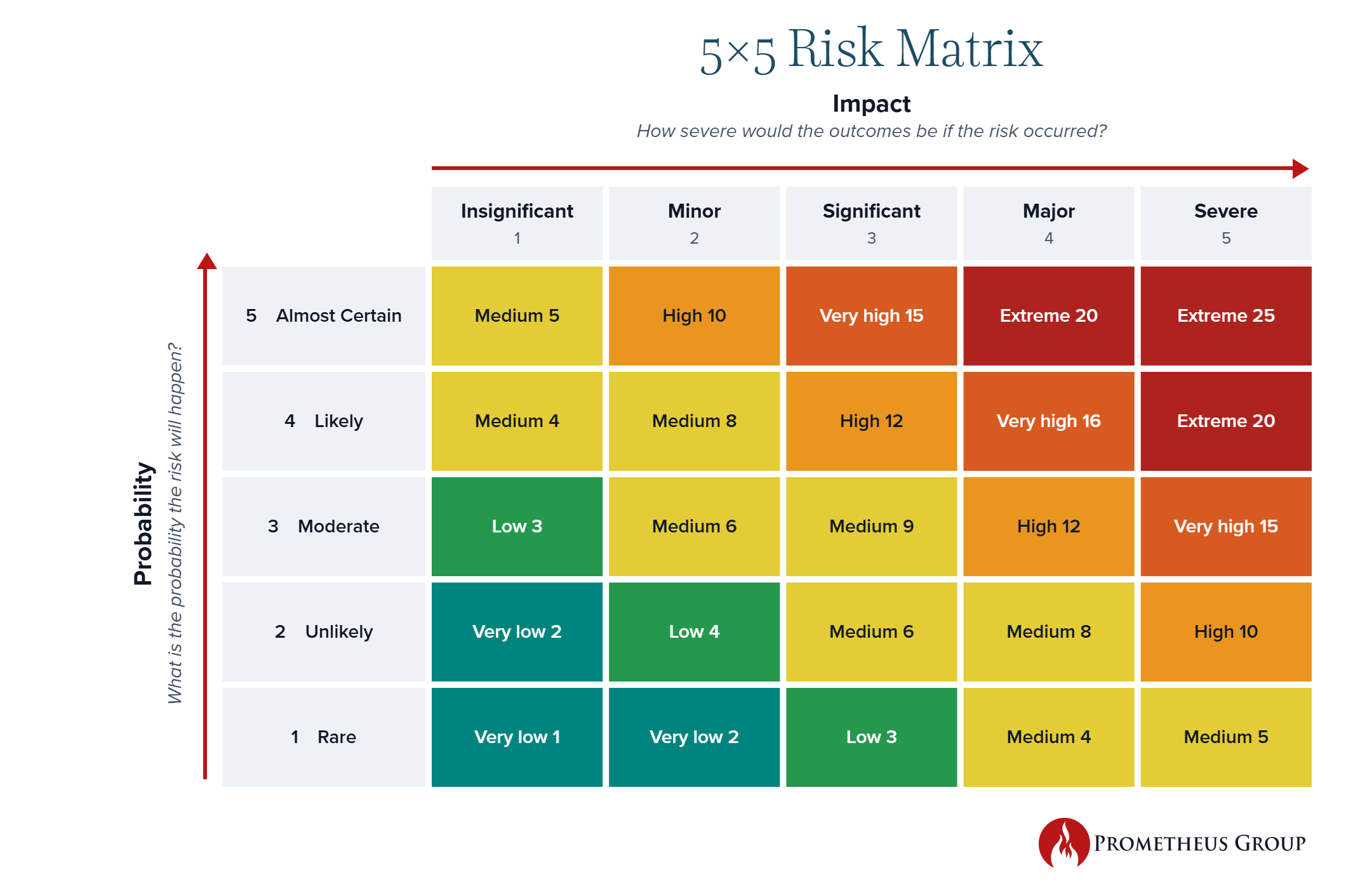
Assign a rating for both factors, typically on a scale of 1–5:
Probability/Likelihood: How probable is it that an incident will occur? (e.g., Very Unlikely → Almost Certain)
Impact/Severity: If it does occur, how serious would the consequences be? (e.g., Minor Injury → Fatality)
Multiplying these two ratings produces a risk score that lets you prioritize which hazards to address first.
With scores in hand, evaluate each hazard against your organization's predefined risk tolerance levels. Hazards that fall into the High or Very High range require immediate action, while lower-scoring risks may be monitored or tolerated. This ensures resources are directed toward the most critical threats first.
After evaluating the risks, the next step is to implement control measures to eliminate or reduce them. The "hierarchy of controls" is a universally accepted framework for selecting the most effective measures.
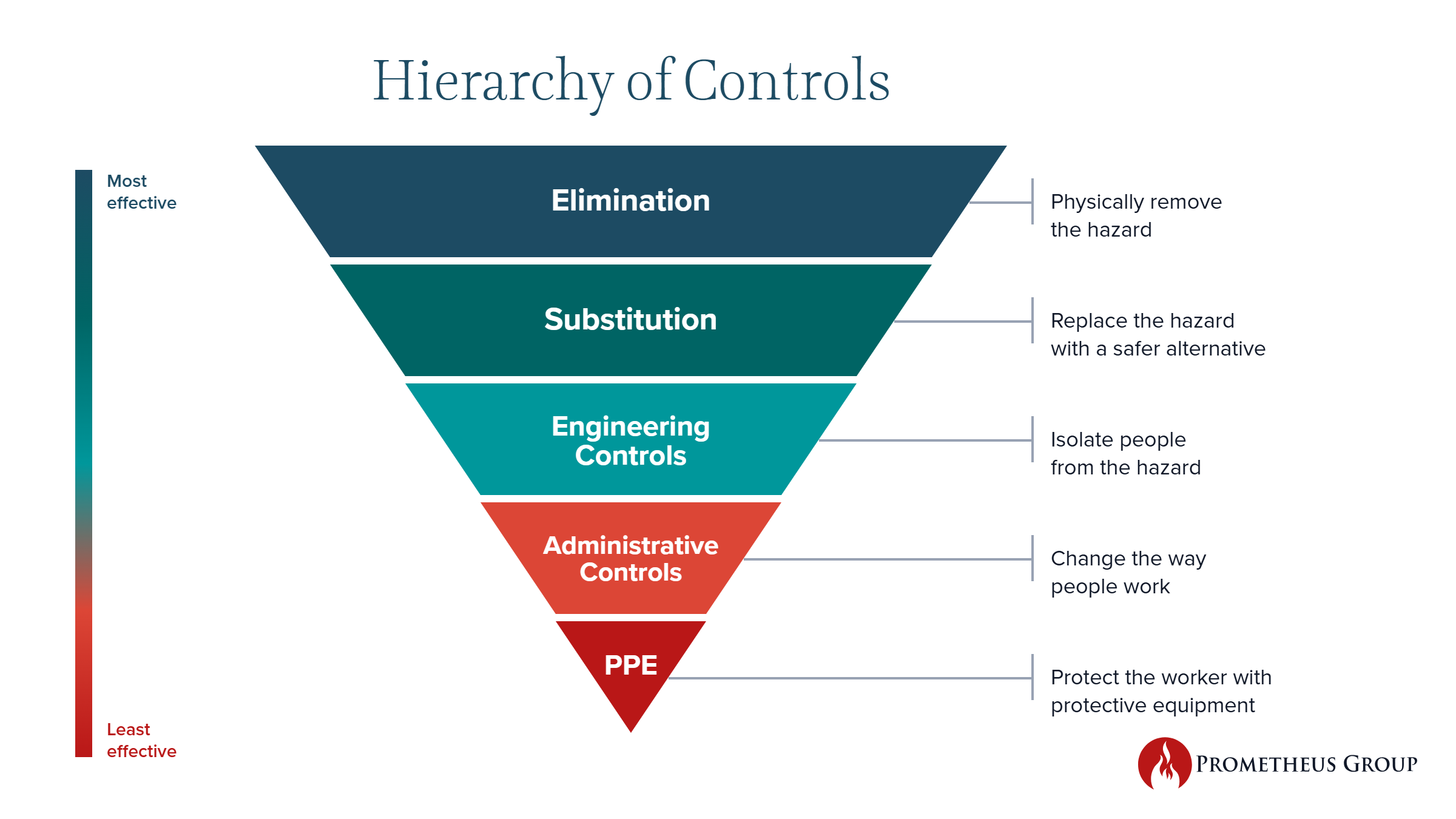
It prioritizes controls from most to least effective:
HIRA is not a one-time activity; it is a continuous cycle. Your workplace is dynamic—new equipment, processes, and people are introduced regularly. Therefore, it's crucial to regularly review and monitor your HIRA to ensure it remains effective.
Set a schedule for reviewing your risk assessments (e.g., annually or after any significant change). Monitor your control measures to confirm they are working as intended and that employees are following the established procedures. If an incident or near-miss occurs, use it as an opportunity to reassess your HIRA and make necessary improvements.
A thorough Hazard Identification and Risk Assessment process is the bedrock of a world-class safety program. It empowers organizations to move beyond simple compliance and build a truly proactive safety culture where every employee returns home safe at the end of the day.
By systematically identifying hazards, analyzing risks, and implementing effective controls, you create a more resilient, efficient, and secure workplace. This isn't just about protecting your people; it's about strengthening your business from the ground up. Learn more how the Prometheus ePAS solution can help.
HIRA stands for Hazard Identification and Risk Assessment. HIRA helps organizations proactively manage safety by identifying dangers before they cause harm and putting controls in place.
In safety, HIRA is a systematic process used to identify potential hazards, evaluate the risks associated with them, and determine controls to reduce or eliminate those risks.
Examples of hazard identification is finding anything that could cause harm. Examples include slippery floors, exposed electrical wires, toxic chemicals, or working at heights.
HIRA (General Safety) and HAZOP (Process Safety) are both safety risk assessment methods—but they’re used in different contexts and levels of detail. HIRA = “What hazards exist and how risky are they?”. HAZOP = “What could go wrong in this process if things deviate from design?”.
|
Aspect |
HIRA |
HAZOP |
|
Full form |
Hazard Identification & Risk Assessment |
Hazard and Operability Study |
|
Purpose |
Identify and assess general workplace risks |
Analyze process deviations in complex systems |
|
Scope |
Broad (any industry, tasks, workplace hazards) |
Narrow (process industries like oil, gas, chemical) |
|
Approach |
Qualitative or semi-quantitative |
Highly structured and systematic |
|
Complexity |
Simple to moderate |
Complex and detailed |
|
When used |
Daily safety management, job risk analysis |
Design or review of process systems |
|
Team |
Can be done by safety officer or small team |
Requires multidisciplinary expert team |
Step 1: Hazard Identification
Step 2: Risk Analysis
Step 3: Risk Evaluation
Step 4: Implement Risk Controls
Step 5: Review and Monitor
See the Prometheus Platform in Action
Discover how you can streamline your asset management processes and maximize your ROI.